2026: Teachers as Writers Category: Winner
Woman in the Wood
by Isabel Davies, Gold Creek School
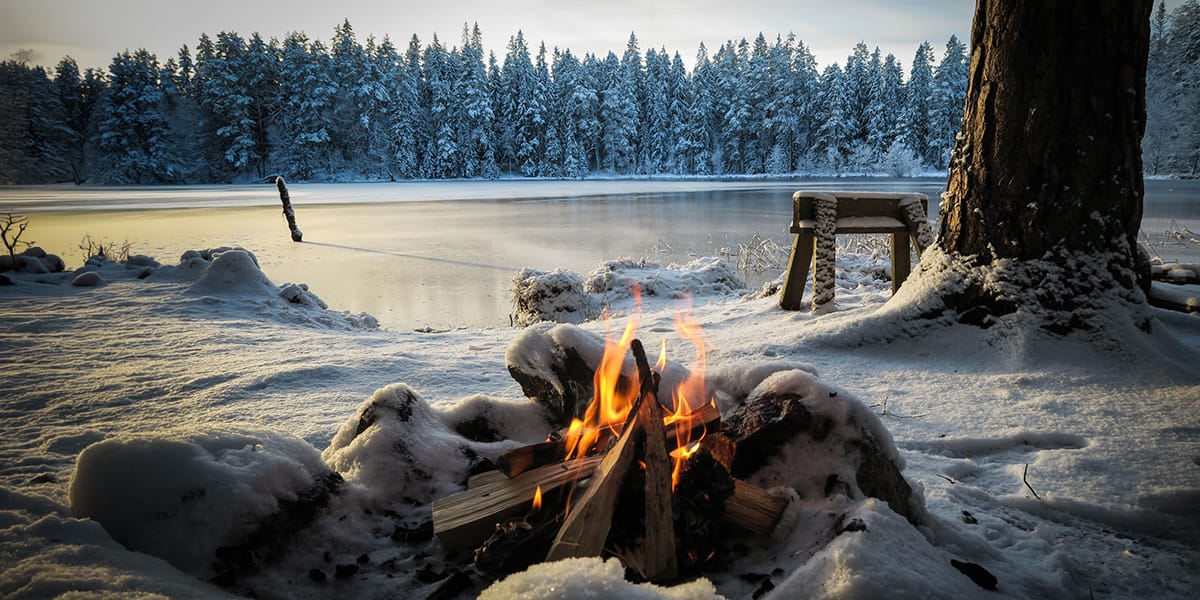
Picture, then, a pair of hands scabbed and bleeding on the haft of an axe, thumping down, one, two, three times on the same winter-struck log. Her fingers are mauve, dirty.
Absent are woodland noises, snow makes no sound. It sneaks up on her in the night, causing a rage. “Why didn’t I chop the wood before it got frozen?”
After a while she stops chopping and tosses her axe towards the shelter.
She tries to light wood shavings. A spark catches, goes out, catches, goes out. A curl of smoke. A smile touches her shivering face, relief for a moment before she must carefully coax the fire to a crackle.
On a stick, held up by two pieces of wood, she lays her frozen wool gloves to thaw out. Pathetic, primitive. A washing line for small things.
She looks over at the bucket, upturned in a snow drift, kicked over the fire when it cracked on the way back from the lake.
The woman sits down on her chair – a crude structure made from a split board, nailed to the back of a cut log. It forces her back straight. It’s uncomfortable, so she slouches. The pain in her back keeps her awake.
“The morning,” she says. “It’s only the morning!”
Once the fire is merry, she makes her bed. Beside the bed, a box. She drags a finger across the engraved lid, rubs her hands together, tries to feel again. Still, no feeling.
She tests the gloves. Still soaking. “I should fix that bucket.”
The beeswax tin was missing; shouts come as she searches. “I’ve only got two bags. Where could it be?”
Under the edge of the lean-to. Snow-clad and solid. Finally, she splits it with her axe.
She chips wax into a mug and sits it near the fire to melt.
She walks a way into the woods to a hole she dug. Not deep enough, she always thought. “But no one else is here! They never will be!” She can squat anywhere she wants.
She adds another log to the fire before going to retrieve the bucket. The split down the side is enough to let water through, but it’s invisible. She has to fill it again to see exactly where it is.
Back down the hillside to the river.
*
In the city, there was a shop. It sold everything.
The shopkeeper warned her: Don’t leave food out, bears will come. Don’t fall asleep with wet hair. Do you need a map? I have a map, but even this map may not know where you are…
“I need a bucket!”
The shopkeeper pulled a handsome wooden bucket from the rafters.
“Next time you see me, I’ll be a changed woman.”
The shopkeeper looked into her eyes and did not smile. “I don’t doubt that.”
She struggled to carry her trove: three empty journals, a new pen, ink. A book on survival. A flint and steel. A hoard of salted meat, folded like paper, and grains to soak, and things to cook and eat with. An axe, handsome, leather-hafted and sharp. A bow, a hammer, arrows and nails.
She packed her old work, for editing, to twist it into a perfect suite to show when she returns.
Ready, prepared, eager.
*
She washes her plate, and opens a journal, spying the others in the box. They’re supposed to be bursting with poetry and prose. Bountiful. Beautiful.
Her gloves are still damp.
Fetching water, cutting wood, visiting the hole. The sun shines through the trees above but it does nothing to warm the earth. She hums as she works, no song in her chest. She inspects the snow around her camp, looking for footprints. The snow is stark and unspoiled.
The woman picks up her pen. She writes what she thinks could be the date. The pot of ink is brimming.
It seems like this cold has gone on forever… she writes.
“Stupid! Someone else has already written that!”
She crosses it out. Hides the journal under her pillow; to forget.
*
Four days walk away. It would have been faster by horse, but why bother?
The walk was nice and slow. Acclimatising. Like a goldfish in a glass, waiting to join the others in its new bowl. It got louder and quieter; the wood rose and fell with the hours. She slept on dirt and leaves at night, and wanted to stay right where she was. But she kept on.
A river down the hill, bountiful spruce trees. The woman digs a hole a hundred paces from her new campsite. The lean-to constructed from needles and twigs and rocks and branches. The fire is soon roaring in its stone circle. She reads a few pages of the poetry book she took with her. Retrieves her journal from the engraved box her mother gifted her. Puts a pen to paper. Sighs deeply into the twilight and smoke and the crisp air.
“The snow will be here before I know it.”
The furs are comfortable. She will do the washing up in the stream in the morning.
Awake too early, the trees are still dark, the fire is out. There’s a light breeze in the air, but it’s enough.
The needles and twigs and rocks and branches fall around her in a mess, and she starts to cry.
Thinking of her warm bed in the large house up the road from the everything-shop.
The woman pulls herself from the wreckage, attempts a smile. She lights the fire again and lets her eyes grow accustomed to the dim woods. The moon is too far behind the trees.
It would be morning soon. Only morning. Time for work to be done.
Some words come as she sits beside the fire. The chair makes her back ache a bit, but she just shifts. Her pen poised over the white page, a small blot where there was too much ink on the nib.
She writes: First morning…
*
She strings the bow. She’d seen someone shoot a target at a carnival. It didn’t look that hard.
The little deer is shot through. It stumbles, hooves slick with red and urine.
She screams. Horror and happiness! Meat!
She runs towards it and it tries to run as well.
The woman cuts its throat, the bile rising in hers.
She slices it into pieces back at the camp, buries it on the other side of the river under rocks and snow.
The blood on her dress and hands remains. The red on her front and on her cuffs a reminder. The meat isn’t needed now, but it might be. Hopefully the flies leave it alone after the freeze.
*
She had lost the thoughts of others, their voices and their faces. Sometimes, there was the hum of her mother, usually late at night or early in the morning when her mind is fogged with fatigue and the trees are dark and interesting.
She tried to write them down to remember. Reading it back was always difficult.
Her old work is hard too. The words that she recognises are so perfect. She won’t edit them.
In the evening, the woman takes the pen, flings it away.
She moans into the mess of furs, still a mess from the night before.
“I should go home.”
She thought she was home.
*
Winter is interrupted by yellow light.
She breaks her finger. Days of pain and bruising, a plum-shade that creeps up her finger.
The book tells her to make a splint. She takes two twigs and straps them around her finger.
“I don’t want my finger healing sideways!” She nearly giggles.
She rips pages from a blank journal for the fire.
Flames lick at the paper once the sparks catch. There are words on it.
The book of poetry she brought to spark her candid magic.
Tears nearly form but she feels the warmth of the fire. Her finger throbs. The woods shatter with the first birdsong. The pages of the poetry book are printed too small.
She peels each page from the cover and places them neatly into the fire. She takes the cold, smudged survival book and does the same.
She leaves the blank journals. Something would come.
*
The wood speeds up.
She feels a surge, washes her clothes, squatting naked in the shallows. Races back to the camp to place them on a branch by the fire to dry. Back to the river, scrubbing herself red; tries to untangle her hair. Back up to the camp, blue and icy. Wraps herself in fur and sips hot water.
Birds now sing, and when she wakes one morning there are large-padded footprints behind her shelter in the damp dirt. She spies their owner later, digging through a stone mound to find the fetid remains of the pre-winter fawn.
She stokes the fire, adds a log, and rests another mug of water among the coals.
Something golden in the coals; she pokes it with a stick. The latch from the wooden box. She pushes it underneath the blackened wood.
JUDGES’ COMMENTS
With vivid detail and moments of clever, understated humour, ‘Woman in the Wood’ quickly draws the reader into the woman’s world. The judges particularly enjoyed how the movement between her hopeful preparations and the harsh realities of survival reveals the distance between her artistic ambitions and her lived experience. There is something both amusing and unsettling about the story, and the ending leaves plenty to think about. A distinctive and accomplished piece of writing.