2026: Janet Rickwood Award
The Perimeter
by Oren Zelig, Canberra College
Heat hovered upon the bitumen in warped waves, as the vermillion horizon liquified and the paddocks remained brittle as old paper. Persimmon dust rose lazily behind passing tyres to McKinley. Joey Evison, twenty-six and with an expired press pass, kept his boot off the accelerator to stop the transmission tunnel heat from burning his sole.
The first crack came before the town appeared, beyond the paddocks where the fence lines started to thin. A second followed four seconds later, the exact time it takes an unhurried hand to cycle a bolt. Above the tree line, a single thread of grease-coloured smoke rose, hooked up into the atmosphere like a grey wire. Nothing moved to explain it. The paddocks stayed fixed and empty, fence posts sinking into haze.
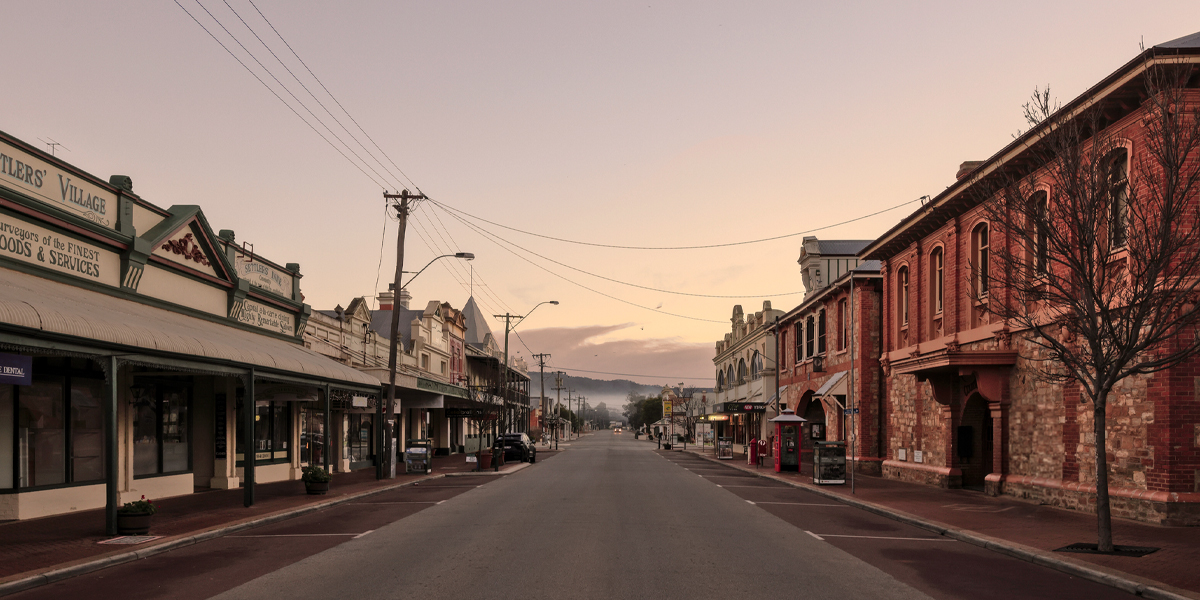
McKinley appeared unheralded against the evening. Fibro houses sat back from the road, their corrugated roofs the colour of an old bruise. Joey found an elderly woman, Mrs Gable, sweeping her verandah.
“Mrs Gable?” Joey stayed at the bottom step. “Joey Evison. Checking on the regional water pressure for a piece.”
“Tank’s fine.”
“Right. Saw some smoke out west. Looks like a rough burn-off in this wind.”
“Boys, Brigalow Block, gave the… annual. For the fire breaks.”
“A bit late for clearings?” Joey reached into his pocket, brushing a brass .308 casing, found by the cattle grid. “…I heard a couple of heavy rifle shots just before the smoke. Someone putting down stock?”
Mrs Gable’s hand tightened on the broom till her knuckles whitened. Her lower lip twitched. “It wasn't,” her voice thickened. “We don’t have any rifl-- that’s out-” All animation bled from her face. “The wood splits when the sap gets too hot.”
“Two splits? Four seconds apart?”
She levelled into a flat, memorised drone. “Wood. That’s all it is. Just hot wood.”
Inside the Royal Hotel, the air smelled of stale beer and fly spray. The publican, a large man named Marra, wore a grey singlet gone yellow beneath the arms.
“The road’s blocked four miles out.” Joey approached, dropping his notebook onto the laminate counter. Two men sat in the corner booth, their faces obscured by shadow, glasses motionless. “Police tape across the creek track.”
Marra took a greasy rag, wiping in dull circles. “They’re doing the back-burn. Rural fire blokes. If they don’t get the stubble down before the north-westerlies hit, the whole valley goes up.”
Joey pointed to his first notebook entry 14:12 - 2x shots west. “Spoke to Mrs Gable, said the clearing was private land. Brigalow Block Boys.”
One of the men scraped his boots on the linoleum. Marra gazed through Joey. “Mrs Gable’s eighty-four, mate. Her mind’s a colander.”
“Seemed pretty clear about timber cracking.” Joey retrieved the cartridge, dropping it onto the damp laminate. “What timber leaves a five-millimetre primer strike on a Winchester case?”
Marra leaned in, his bulk blotting out the downlight. “People shoot pigs out here, mate. If you’re going to run a story anytime a bloke shoots a dingo, you’re going to run out of ink before you hit Roma.”
“And the police tape?”
“They’re protecting the trucks,” the younger man announced from the corner. He leaned inward, his Akubra barely blocking white sunburn scabs across his nose bridge. “Water tankers need the full width of the track. They tape it off so we don’t spend the night pulling sedans out of sand-drifts.”
Joey turned to the shadow. “Who are you?”
“Nobody.” Marra dropped his tone into something cold. “And you’re about through with your drink. The road back to the highway doesn’t have tape on it.”
Joey took the old stock route instead, the dashboard rattling as the tyres hammered over the iron corrugations. Nothing remained of the western lease homestead but blackened stumps of ironbark and corrugated iron twisted by heat. A police officer stood in the perimeter of the ash, lifting what looked like a melted rifle barrel out of the debris. He didn’t turn around as Joey’s boots crunched on the burnt earth.
“You shouldn’t be here,” his voice gravelly from breathing ash. “Hazardous materials.”
“I’m looking for the owner, a bloke named Miller.”
The cop turned. His face was weathered into permanent crevices, his eyes small and unreadable. “No Miller here.”
“Council still lists him as a leaseholder.”
“The lease was dissolved,” his voice devoid of inflection. “What you’re looking at is an abandoned structure lost during an authorised hazard reduction.”
Joey looked at the brass casing tucked between his fingers, his teeth coming together. “I heard the shots. Two of them. It wasn’t timber splitting.”
The cop stepped forward, his boots erasing a patch of distinct tyre tracks in the soot, deliberately blocking Joey’s view of the inner foundations. “You have a signed statement from a verified witness?”
“Mrs Gable-”
“Mrs Gable is an old woman with advanced dementia; her statements aren’t evidentiary.”
“And Marra?”
“Marra’s a publican; he tells stories to keep people in the bar. That’s his job.”
Joey looked past the cop’s shoulder. A small dog bowl stuck out of the wood ash, its blue enamel scorched off one side, but the embossed name Buster still visible through the soot. The wind was rising, shifting red sand over the bowl, filling the letters grain by grain.
“Go back to your van,” the cop instructed. “The wind’s coming up.”
Joey pulled over by a lone windpump at the edge of the town’s grid. He opened his notebook to the page marked Shots.
He took his pen and drew a single heavy line through it, writing Timber splitting (heat) above. He turned the page. Miller’s lease became Crown land (vacant). He closed the notebook. The engine caught with a rough cough as he drove south, throwing up a curtain of dust thick enough to swallow the town. The rearview mirror filled with red until there was nothing left to reflect.
Seventy kilometres out, the bitumen steadied. The notebook sat buried in the glove box.