2026: Year 9 & 10 Category: Winner
Enjoy Yourself
by Irina-Angel Zheng, Telopea Park School
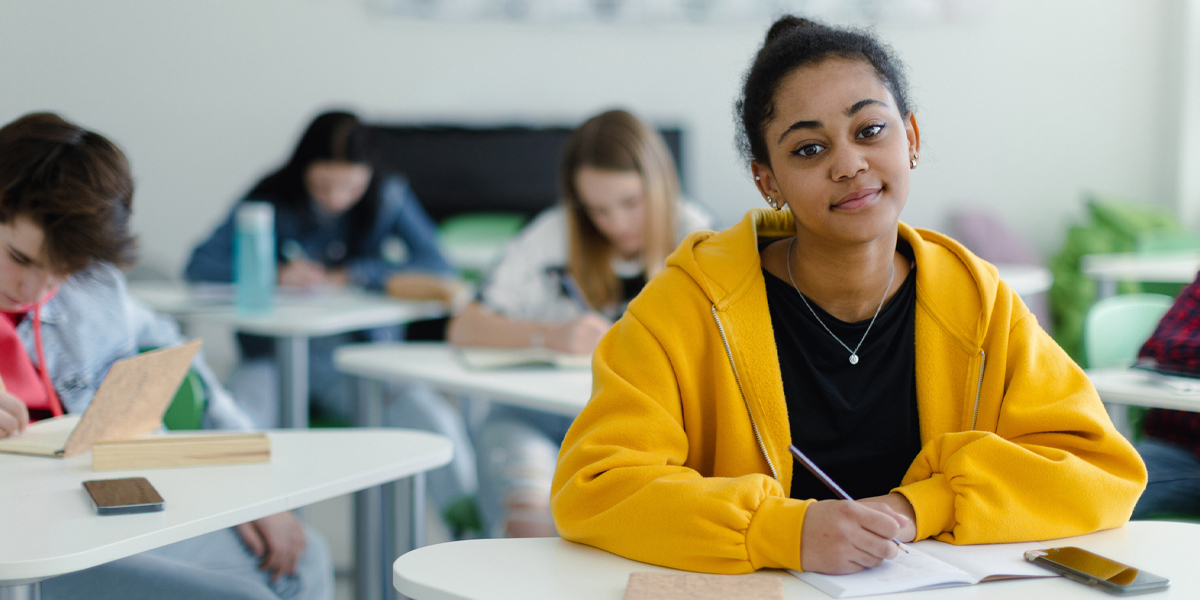
The unpredictability of school sometimes gets us. There’s an invisible map that nobody drew, yet everyone followed. The field belonged to the athletic boys, who walked around school as if they ruled it. The tables in the cafeteria were for those who were in the drama club one day and the debate club the next. Then there’s Blythe, sitting alone, reading whatever new book she picked out from the library that week.
For a long time, Blythe thought something was wrong with her.
On the first day of school, she had watched the newly formed popular group laugh so hard that a teacher had to intervene and tell them to keep it down. She felt like she was missing out on an invitation that got lost in the mail. She’d try to eat fast so that nobody would notice how long she sat alone for, she pretended to do homework or just tried looking occupied in general.
Over time, she couldn't even remember what had changed.
It weirdly started because of a simple pencil. Blythe was sitting uncomfortably in a maths class because she had forgotten her pencil, and the only person close enough who had a pencil was the girl next to her, Jade. Jade seemed completely unbothered by whatever was happening in class. She didn’t even glance up from her sketchbook before handing Blythe a pencil and saying, “Keep it, I have like fifty of them,” before going right back to whatever she was doodling.
Blythe slowly nodded before watching her for a moment. Jade didn’t look like she was waiting for anyone to strike up a conversation with her; she wasn’t performing loneliness or anything at all. She just continued drawing in her sketchbook, fully absorbed as if everyone around her didn’t exist.
Blythe looked at Jade’s sketchbook and thought, “Huh, that actually kind of looks nice.”
Inspiration dawned on her. The next day, Blythe brought a notebook to school, but instead of drawing like Jade, she started writing down dumb prompts and ideas for stories, and unfinished characters with snippets of dialogue. It was working. Twenty minutes had already passed by without her looking up, and she didn’t feel embarrassed or lonely. She was just as immersed as Jade had been with her sketch book; she was enjoying herself.
It didn’t start happening all at once; the shift in how Blythe saw things. There were still days when she’d catch herself watching those popular boys head off to hang out with each other after school, all of them walking while laughing about some inside joke she’d probably never be part of, and that feeling of being left out would come back, the one that never fully went away, except she just got better at not living in it.
One of the small things Blythe started to notice was how the supposed ‘horrible’ librarian, Ms Higgins, would always save her a copy of a new release before it could hit the shelves, because she knew that Blythe was one of the few who actually read them. Then, when she walked home in the middle of March, when autumn had hit, and leaves went that specific charred orange colour, she felt less lonely and instead felt like she was enjoying herself.
It wasn’t that she didn’t want friends; in fact, she did. Some weeks felt lonelier than others, and Blythe didn’t pretend that it didn’t sting, but somewhere along that loneliness, she stopped waiting for someone to give her permission to enjoy her life. She stopped treating her own company as a consolation prize for not making the cut with the popular crew or the drama club, or anyone else.
Popularity, from where Blythe observed, actually looked less like happiness, but more like a full-time job. Marcus, the alleged leader of the popular crew looked like he was always managing something, whether it was who was mad at whom or who got invited to what hangout. Blythe used to envy the sheer noise of whatever they were bluffing about, but now that she had started enjoying her own company, it looked exhausting.
Meanwhile, amidst everything changing, Blythe still carried her notebook and Jade’s pencil around, which she now thought of as a good luck charm. She’d walk home in the late May glow, with whatever new book Ms Higgins had recommended that week. None of that depended on anyone showing up.
One afternoon, Blythe noticed a new girl, sitting by herself at lunch, doing the exact thing she once did: eat way too fast, pretend to be busy. Blythe almost said something, but in the end she didn’t, because she figured that the girl would eventually find her own pencil, the small hobby that made an ordinary Tuesday maths class worth showing up for. Blythe wished, watching the girl, that someone would tell her what she had learnt. That you don’t need to fit in, play sports. You don’t need to hang out with the crowd, get an invitation to a party or get someone’s permission to do something.
Yet Blythe felt wrong for leaving without saying anything, so she promised herself she’d talk to the girl the next time she saw her. The next day, Blythe walked around the halls searching for the girl. She ended up finding her sitting alone in the library. She mustered up the courage to approach her, but instead of speaking, she simply slid her a folded note.
Sometimes in life, you have to realise that even if you're alone every so often, the least you can do is try and enjoy yourself.
JUDGES’ COMMENTS
The judges appreciate the authentic tone of this story, the original approach to the subject matter, the familiarity to the target audience of the setting and conflict, and narrative devices such as the narrator breaking the fourth wall. The narrator does this by addressing the audience in the first paragraph, referring to ‘us’, and setting the context before narrating the story of Blythe from a third person point of view. The title is clever and the conclusion is affirming without feeling contrived. The judges certainly enjoyed themselves reading this engaging story.